Modern physics reveals one of the most counterintuitive ideas: true emptiness does not exist. Even in a perfect vacuum – space devoid of matter – something constantly stirs. Scientists call this restless activity quantum fluctuations.
At the heart of quantum mechanics, these fluctuations arise directly from Werner Heisenberg’s uncertainty principle. This principle states that we cannot know both the exact energy and the exact time for a system simultaneously. In other words, energy can briefly “borrow” from nothing, creating temporary changes.
What Exactly Happens in the Vacuum?
Imagine the emptiest space possible. Classically, it holds zero energy – perfectly still. However, quantum rules change everything.
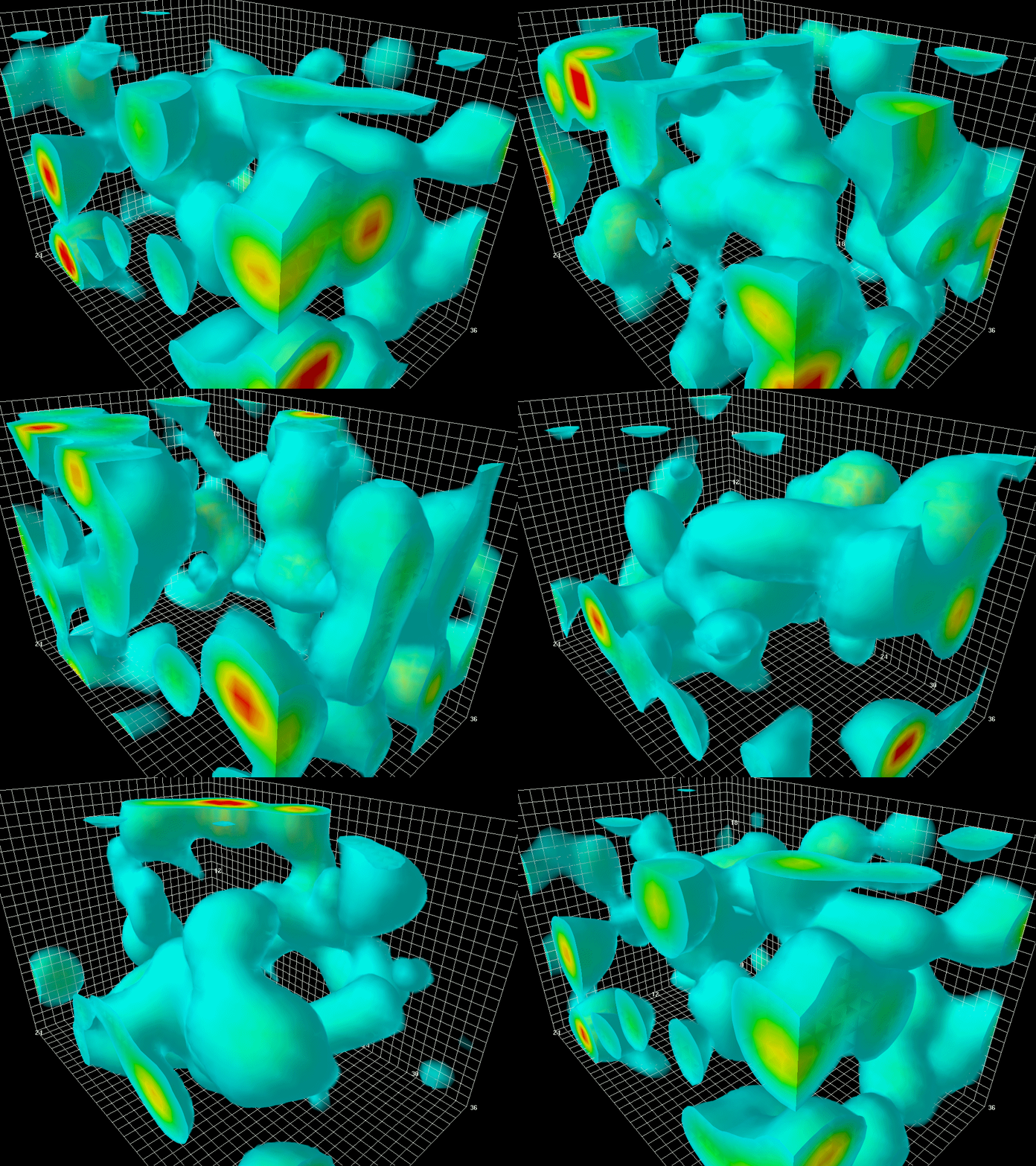
The vacuum becomes the lowest energy state of quantum fields that permeate all space. Due to uncertainty, this “ground state” never stays perfectly zero. Instead, energy fluctuates slightly around zero.
These tiny ripples manifest as virtual particles. Particle-antiparticle pairs spontaneously appear, exist for a fleeting moment, and then annihilate each other. They remain “virtual” because they borrow energy briefly and repay it almost instantly – without violating conservation laws over long times.
In essence, nothingness dances. The void teems with ephemeral creation and destruction.
Real Effects We Can Measure
Quantum fluctuations sound abstract, but experiments prove them real.
One famous example is the Casimir effect. Physicists place two uncharged metal plates very close together in a vacuum. Suddenly, the plates attract each other slightly.
Why? Fluctuations outside the plates occur freely, but between them, only certain “wavelengths” of virtual particles fit (like waves in a narrow tube). More pressure pushes from outside than inside, forcing the plates together. This force has been measured precisely – direct evidence of the vacuum’s hidden activity.
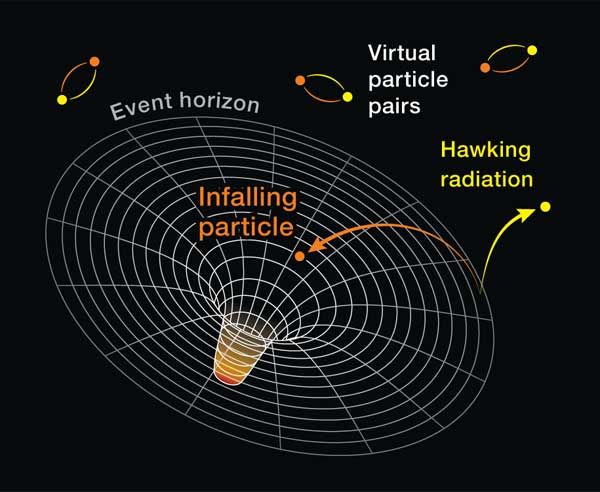
Another profound implication appears in cosmology. Quantum fluctuations may power Hawking radiation near black holes. Virtual pairs form at the event horizon; one particle falls in, the other escapes – making the black hole slowly evaporate.